CURRENT EXHIBITION
OCTOBER 2026
OPENING RECEPTION OCTOBER 2ND 5 - 8 pm
ON DISPLAY THROUGH OCTOBER 30
Darla Slee: FLORA AND FAUNA
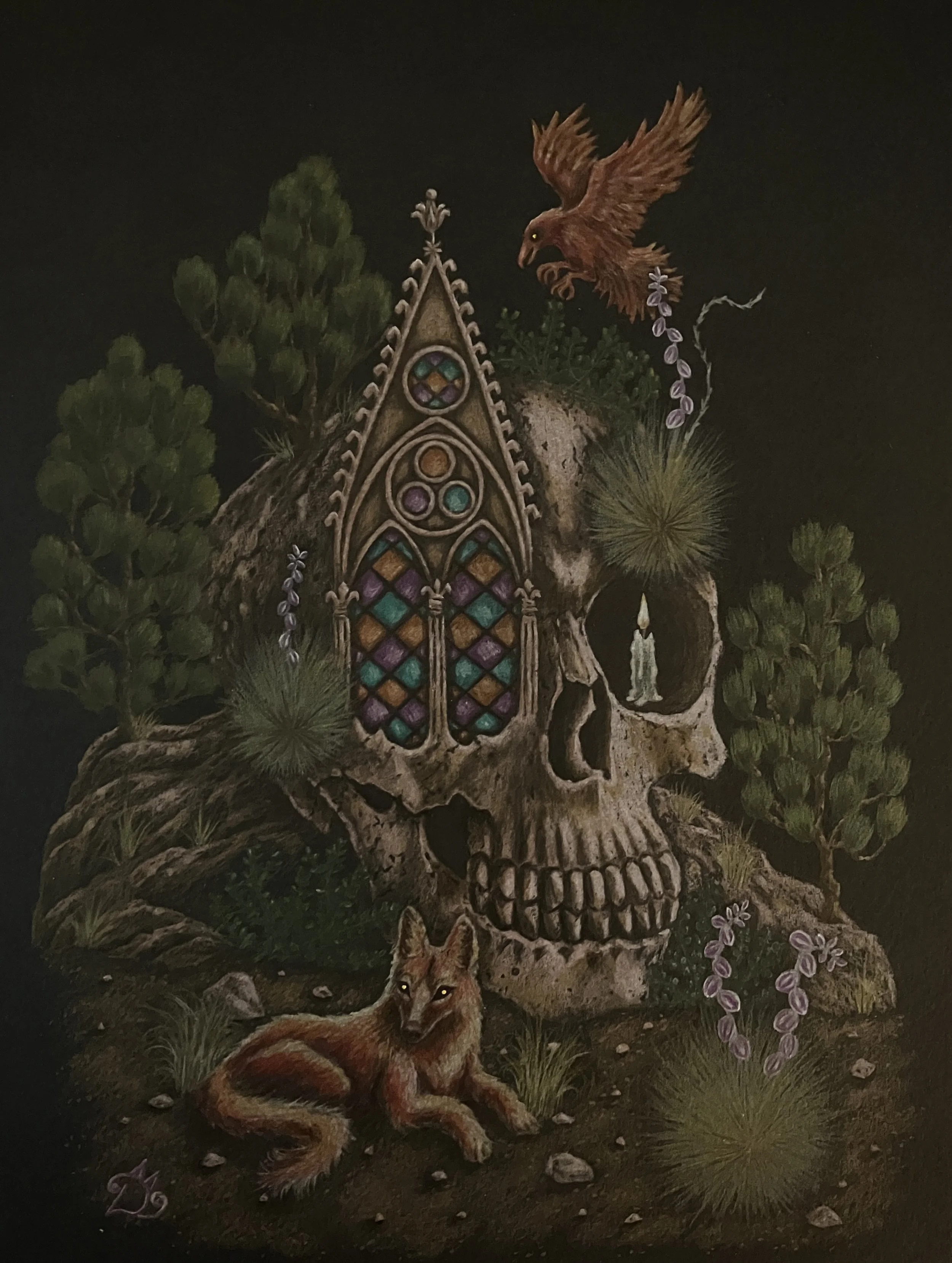
Cottonwood Center for the Arts is pleased to announce a solo exhibition for the month of October by local artist Darla Slee: FLORA AND FAUNA.
From the Artist:
As a child, I always wanted to go on an adventure. One in which I would travel to distant lands (or the distant past), encounter a bit of danger, and meet fantastical creatures. Since these things aren’t easily done by children, I turned to my imagination to escape from the ordinary and spent many hours drawing and making paper toys for myself. These early pastimes engendered in me a lifelong passion for creating. As an adult, I find inspiration from folklore, history, speculative fiction, music, and the Colorado landscape. I endeavor to create fantastical realms with fun characters in order to delight, provoke thought, or leave the viewer feeling unsettled.
This show explores the range of moods one might experience when encountering our local, natural landscape. Sometimes delightful and pretty, other times odd and menacing, one finds something intriguing at every turn.
Dale Johnson: THERAPY
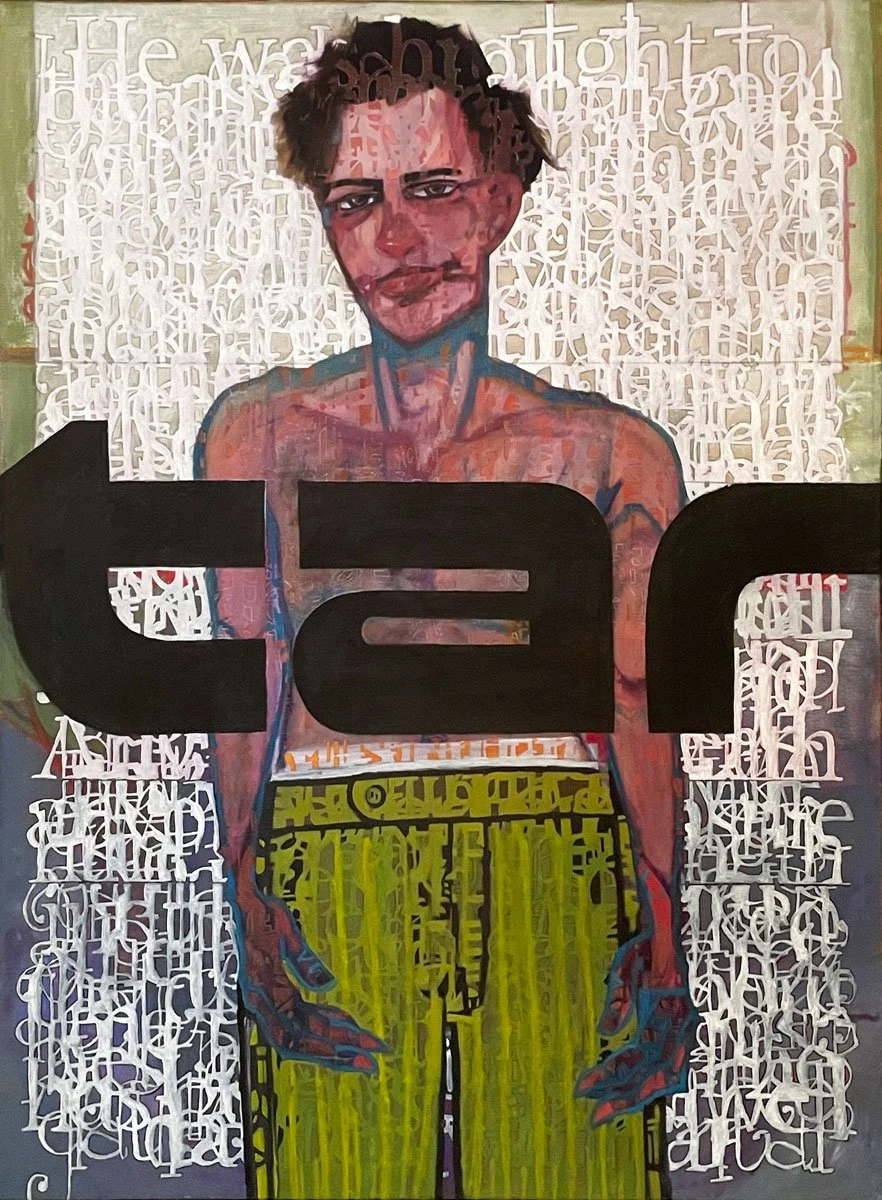
Cottonwood Center for the Arts is pleased to announce a solo exhibition for the month of October by local artist Dale Johnson: THERAPY
From the artist:
The body of work is rooted in my research into the 19th-century medical journals documenting insanity and mental illness. I am particularly drawn to the written accounts of physicians working in insane asylums records that describe patients through their family histories, past and present traumas, symtoms, agitations, behaviors, and the treatments administered during their confinement.
I take fragments of these historical medical accounts and interpret them directly onto the canvas. The scripts are painted across the surface, including the figures representing the patients themselves, becoming something like a tattoo upon the body. The text becomes part of the figure’s physical presence, suggesting the permanence of the labels, diagnoses, observations, and narratives imposed upon those being documented.
Two distinct fonts are layered and repeatedly overlap, eventually creating passages that are difficult, and sometimes nearly impossible, to read. This loss of legibility is intentional. The physicians’ words were written as an attempt to observe, classify, explain, and preserve a patient’s condition, yet through their accumulation they begin to obscure the very person they describe. The individual becomes buried beneath language.
By placing these doctoral descriptions directly onto painted bodies, I am interested in the tension between being seen and being defined, being documented and being understood. The figures exist beneath layers of medical language—present, but partially concealed—reflecting both the humanity of the patients and the limitations of the systems through which their stories were recorded.
(Ask me about the rabbits).